Easy day trip or overnight from Osaka and Kyoto awaits in Japan’s former capital
A former capital of Japan. Beautiful spring cherry blossoms and fall leaves. While the city of Nara is best known for its wild yet adorable (and feedable) deer, many Japan visitors, especially families, might wonder: “Is Nara worth visiting with kids?”
Nara can be easier to navigate than overcrowded Kyoto. The city’s key attractions are closer together and easier to visit on a day trip or overnight stay. Plus, with easy train access from both Kyoto and Osaka, Nara deserves at least a day trip during your Japan vacation.
Our own family of four has visited Nara multiple times, including day trips and overnight stays at a ryokan (traditional inn) during the annual mid-August Obon festival, plus a post-sakura season stay in a hotel. In fact, Nara is a place we keep wanting to visit with our kids. We even prefer visiting Nara to going to Kyoto.
Plan your trip to Nara
Our experience visiting Nara with kids and a mobility disability
Family and accessible travel: A quick note about our little family
Anthony, Jodie, Connor, and Aster St. Clair: We are the Learners and Makers, and we empower families and the mobility disability community to travel confidently, their way.
As a family of four, we travel with two kids (ages at the time of our trips has included 8 and 11, 10 and 13, and 11 and 14). Plus, Jodie is an above-knee amputee who uses a prosthetic leg for her walking mobility.

When we travel and make vacation plans, we consider not only what is a good mix of fun and safe for our kids. We take into account how well Jodie will be able to enjoy what we do, plus how a destination enables her to spend more time enjoying our family trip, and less time being concerned about the logistics of access.
Accessible travel: Mobility disability considerations in Nara
For many individual attractions, we’ll note mobility tips from Jodie’s experience as an amputee using a prosthetic leg for her walking accessibility in Nara.
Nara can have challenges for visitors who have mobility impairments. The city’s core attractions are in a hilly area, and iconic temple complexes are accessed via stairs. Cobbled streets can be tricky for walking navigation. Shopping arcades and side streets can be narrow.
However, when you have a mobility disability, Nara still deserves a place on your itinerary. Japanese history and culture are on full display, throughout large temples, the green space of Nara Park (with those iconic deer, of course), and a range of museums and other cultural epicenters.
In our experience, travelers who have limited walking mobility benefit from being tactical about which attractions to prioritize, and to leveraging taxes or buses to conserve energy.
What is Nara best known for?
The feedable, adorable deer
Nara is best known for its deer. According to legend, the deer served as messengers to the gods, and Shinto deity Takemikazuchi-no-mikoto rode into the city on a white deer.
Today, both the law and cultural norms protect the deer. They live in the forest outside the city, and come into town to hang out at the park during the day, then nip back to the woods in the evening.

Nara Park is where you’ll find most visitors to Nara. They come for the deer, and to feed the deer. Licensed vendors throughout the Nara Park area sell packs of special crackers that are approved for people to feed the deer.
The deer can get a little pushy and you’ll want to monitor your kids as they interact with the deer. However, most of the time the deer are chill about eating crackers (and the deer-safe, edible cracker wrapper packaging). Many deer will even bow to you: Observe other visitors to learn how.
What else is Nara known for?
The deer are just the beginning. Nara is also well known for:
- Todaiji Temple complex, including the Daibutsuden, one of the world’s largest wooden structures, and the large bronze Daibutsu Buddha statue inside. If you could only visit one temple in Japan, Todaiji is a strong contender.
- Mochi pounding: Workers make tasty fresh mochi treats the traditional way, with rhythmic chants, coordinated movements and swings of a large mallet to keep things interesting
- Obon Festival: The mid-August festival is an opportunity to remember loved ones who have passed on, culminating in Nara with the character 大 written in fire on top of a nearby mountain
- Temples, art, history, and culture: Nara was Japan’s original first capital before moving to Kyoto and eventually to Tokyo. The city retains its elegance, beauty, and status of being the original capital, while being a little more chill and less crowded than Kyoto.
Hint: At the southwestern corner of Nara Park, Sarusawa Pond is an accessible way to enjoy a calm space, with a circuit around the scenic pond. Also stop by the Nara Visitor’s Center on the southeastern corner of the pond. Multi-lingual staff can advise you on attractions, accessibility, events of the day, and more, plus there are free activities available, such as origami crane paper folding, ink calligraphy, and a dress-up room.
Mobility tip
The Todaiji temple complex deserves to be a top priority on your Nara itinerary. The complex is enormous, and the centerpiece Buddha hall itself is about a quarter-mile from the main gate, the Nandaimon Gate (Great South Gate).
To conserve your walking energy, consider taking a taxi direct to the Nandaimon Gate. From there you can make your way to the Buddha hall and enjoy more of the complex. Plus, if you want to walk down toward the park or other attractions nearby, you’ll be going downhill instead of uphill.
What we wanted to get out of our time in Nara
When visiting Nara, especially with kids, we have prized a balance of appreciating Japanese culture and the temples, with opportunities for the kids to move freely around areas like the park—especially so our animal-loving daughter can feed the deer as many crackers as she can.
Where is Nara located, and how do you get there?
Nara is in the hilly area of Nara Prefecture, south of Kyoto and east of Osaka.
From Kyoto, regular trains (not high-speed Shinkansen) can take you from Kyoto Station to Kintetsu Nara Station in 35-50 minutes.
Also consider the Aoniyoshi scenic train. Its route can get you to Nara via the scenic route, including from Osaka-Namba Station or from Kintestu-Tambabashi Station in Kyoto.
How does Nara’s size compare to Kyoto?
Compared to Kyoto’s population of 1.5 million people, Nara is much smaller, with about 360,000 people. Kyoto’s geographical area is also about three times bigger than Nara, plus its attractions are more spread out..
Personally, we find it easier to navigate Nara. Key attractions are in an overall cluster around Nara Park. The surrounding prefecture also offers additional small towns and rural, scenic getaways too.
Our perspective: Is Nara better than Kyoto?
Ah, Kyoto. Kyoto is grand. Elegant. Historic. And so beautiful. Our first visit to Japan in spring 2013 coincided with cherry blossom season, and some of our fondest memories from our travels are from appreciating the willowy branches of drooping white blossoms at the Kyoto Imperial Palace.
However.
Kyoto is perpetually overcrowded. Most visitors flock to only a few parts of town. It can be tricky to get around Kyoto too, and attractions are more spread out than you can easily tell from social media posts or magazine articles. For example, the famous 10,000 torii gates of Fushimi Inari Taisha, the serene pond-side Kinkaku-ji castle, and the green expanse of Arashiyama Bamboo Forest are each in totally different parts of the city.
Nara is a little more laid-back. Yes, it has its crowds, but most of them are in Nara Park feeding the deer, or at Todaiji Temple. You’ll likely do those things too. But when you fan out to other parts of Nara, or do other activities (such as visiting the Toy Museum or taking a pottery class, like we did), you can quickly have some parts of Nara just about all to yourself.
Since most of Nara’s key attractions are in one area, we find that makes it easier to plan. We can expect a big push in the most crowded areas. But we can then easily check out the shopping streets or a museum of choice, since all these and more are in the same overall area.
Mobility tip
Some attractions take you through older Nara neighborhoods. There are some no-joke hills and slopes. As you navigate these in the way that works for you though, it helps that traffic is typically calm, streets are quiet, and you typically can get around safely.

We use Google Maps to plot out our routes, including when walking or taking public transportation. You know your walking pace, and can pad out the estimated travel time accordingly. We find it helpful for Jodie’s mobility and energy, to buffer out extra time, and stop for breaks whenever we need.
Is Nara safe?
Nara’s safety is on par with other destinations throughout Japan. With quality infrastructure, drinkable tap water, pedestrian areas, and an overall society that promotes safety, Nara is a safe place to visit for families with kids and for people who have disabilities.
During our trips to Nara, we’ve always felt safe. Naturally, we maintain and suggest maintaining basic street smarts around traffic, personal belongings, and one another. Otherwise though, Japan’s overall culture of safety extends right down to its original capital.
3 reasons why we went to Nara with kids
Nara has the elegance of Kyoto but is a little more laid-back—not to mention less crowded. We find the city easy to navigate since it’s more compact with Kyoto or Osaka.
People often visit Nara on a day trip from Osaka or Kyoto so that compactness and relative closeness of main tourism sites makes it much easier to do what you prioritized for Nara. You’ll spend less time getting from place to place, and more time doing the things you wanted to do.
Here are 3 reasons in particular why we wanted to conclude our month in Japan with a few nights in Nara:
The deer. Nara’s deer are famous for a reason. They’re cute, chill, and a joy to see up close. Feeding the deer is a popular activity, and we always enjoy buying approved crackers from area vendors, giving them out to the deer, and encouraging the deer to bow. We consider the deer a priority, but there’s so much else in Nara beyond feeding crackers to deer.
Temples, history, and culture. A cluster of historical temples and shrines (including Kohfukuji, Tōdai-ji, and Kasugataisha) in the Nara Park area make it easy for visitors to appreciate many examples of distinctive Japanese temples that remain important to day-to-day life. Now that our kids are older, we can make time for more of the museums and other cultural attractions too.

Mid-August Obon Festival. Japan’s summer heat is a challenge, but the mid-August Obon Festival makes it worthwhile. Being in Nara amid locals and other visitors during this important time brought deep meaning to us. Obon is about remembering loved ones who have passed on, so not only could we take time to appreciate Nara’s context in Japan’s broader story. We could also take time with our kids to remember family members who live on in our hearts.
Mobility tip
The sidewalk east of Kintetsu-Nara Station slopes upward and can be steep. Once you get past the rise, it’s a main area to check out the Nara deer and access Nara Park.
Accommodation: Hotels, rentals, and where to stay in Nara
Nara is full of budget, mid-range, and luxury accommodation. We’d suggest looking at the overall area you want to be in, the activities or amenities you want to be near, and then examining accommodation options accordingly.
Where to stay in Nara for best access to attractions?
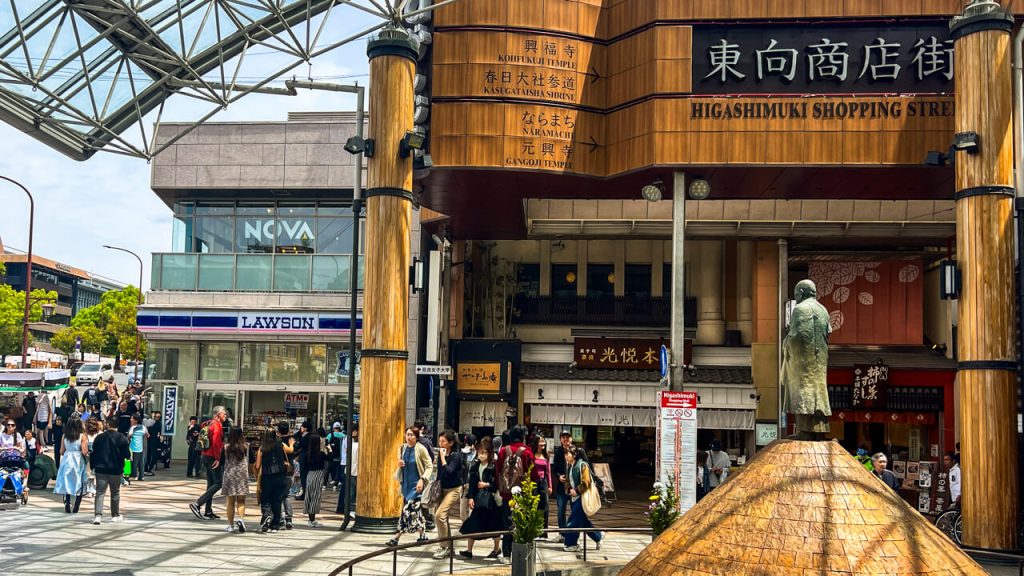
The area immediately around Nara Park offers many accommodation options, including hostels, hotels, and ryokan (traditional Japanese inns). If availability, amenities, accessibility, and cost fit your trip, we suggest staying near the Nara Park area. You’re closer to the major attractions, not to mention restaurants, bus routes, train stations, and covered shopping arcades such as Higashimuki Shopping Street.

Different areas offer different experiences, yet you’re still close to the chief attractions. We’ve stayed at a ryokan south of Nara Park, which offered great people-watching, green space, and a little touch of calm. We’ve also stayed in a hotel on a pedestrian street just north of Kintetsu-Nara Station. That experience had relaxed lanes lined with shops and restaurants, not to mention a serene rooftop terrace.
Mobility tip
Many lodging options in Nara are older and may be less accessible.
While elevators are common, there still may be steps to your room or to onsen (bath) areas. For example, the ryokan where we stayed had good elevator access to all floors, but a few steps were part of the access to our room and to onsen areas.
Newer properties have more accessible designs, but you can message hotel staff to discuss the layout and options that work for your mobility.
Where did we stay in Nara with kids?
For our various multi-night visits, we’ve stayed at both a traditional inn and a cute hotel.
Ryokan experience
We stayed in the main part of Nara at the Daibutsukan ryokan:

- Delicious daily Japanese breakfast (optional, but we recommend it)
- Public and private onsen
- Comfortable lobby
- Room balconies overlook Sanjo Dori Street, great for people-watching (especially during times like Obon when Japanese people often wear traditional kimono or yukata)
- Right across from Nara Park
- Convenient access to Sarusawa Pond, Nara Visitor’s Center, Nakatanidou mochi shop (with mochi pounding), shopping streets, and more
- Family friendly tatami mat rooms and nightly turndown service for futons
See details and availability
Hotel
We’ve also stayed at Bakery Hotel Chateau D’or, located on a quiet pedestrian lane about two blocks north of Kintetsu-Nara Station:

- Lovely shops, cafes, and restaurants line the street
- No vehicle traffic
- Music plays on the street during the day, and pretty streetlights add ambience at night
- Breakfast included, and the on-site cafe offers meals, snacks, and drinks throughout the day
- Rooftop terrace is a serene getaway
- Quick access to station, bus stops, a 7-Eleven convenience store, and Nara Park
See details and availability
Mobility tip
Elevator access is convenient for rooms and the floor with your breakfast. Onsen rooms are accessed via a flight of stairs.
Where to stay in Nara?
Excellent properties abound throughout Nara. We enjoy ryokans for the traditional Japanese culture and hospitality, not to mention onsen, Japanese breakfast, and the comfort of yukata robes.
More important than any specific property is the overall location. Fortunately, that’s easy in Nara.
Most accommodation is in the central area around Nara Park, especially between National Route 369 and Naramochi Odori Street. You’ll have the best odds of finding the right lodging in this area, especially when traveling with kids and needing to accommodate more people:
10 popular things to do in Nara (5 are FREE)
With so many cultural attractions clustered in one area close to a major train station, Nara does a great job of having lots to check out and makes it convenient to do so. Beyond feeding the deer, let’s break down what else you’ll want to add to your Nara itinerary.
Mobility tip
Many parts of Nara have a built-in expectation of pedestrian access. However, you can reach many attractions by taxi or bus.
5 FREE things to do in Nara with kids
Is Nara worth visiting, especially with kids? Not only are attractions convenient, but there are some easy free things to do.
For starters, feeding the deer is not free, though viewing them is. Especially when visiting with kids, you’ve got lots of free options in Nara, including:

- Window-shopping along shopping streets such as Higashimuki Shopping Street, just outside the east exit of Kintetsu-Nara station
- Visiting Nara Park: It’s a beautiful green space, perfect for a stroll, fresh air, and for people-watching as visitors feed the deer.
- Play with traditional Japanese toys at the Naramachi-Karakuri Toy Museum: The toys and games are fun but need a gentle touch, and donations are appreciated.
- Watch the mochi pounding at Nakatanidou: Timing varies, and the few minutes the pounding lasts are great fun. It’s free to watch, but buying and enjoying some of the mochi is well worth it.
- [As much as we loved the Nara Visitor Center, it’s closed as of Mar. 31, 2026.]
Free activities and dress-up at theNara Visitor Center: At the southeastern corner of Sarusawa Pond, this visitor center is an indoor delight, especially when you need a break from summer heat or a sudden downpour. Staff have free activities, such as ink calligraphy and folding paper cranes, and there’s a dress-up room with kimono, sumo suits, and more.
As much as we love playgrounds, we’re not aware of any around the main Nara Park area. We haven’t been there personally, but other parents have noted there’s a small playground at Hokkeji Higashimachi Gaiku Park, about 2.7 km (1.7 miles) west of Kintestu-Nara Station.
Mobility tip
Consider a taxi to and/or from the toy museum. From Sarusawa Pond, it’s about 750 m (half a mile). The terrain is hilly, sidewalks vary, and some streets are cobbled. However, it is a lovely walk too, and we enjoyed going through Nara’s older residential neighborhood areas.
Attractions: What we did and what we skipped
Nara has a range of attractions in and around Nara Park, and more just outside the main area. However, the overall surrounding prefecture offers even more options, which are worth adding to your itinerary when staying in Nara for a couple of nights.
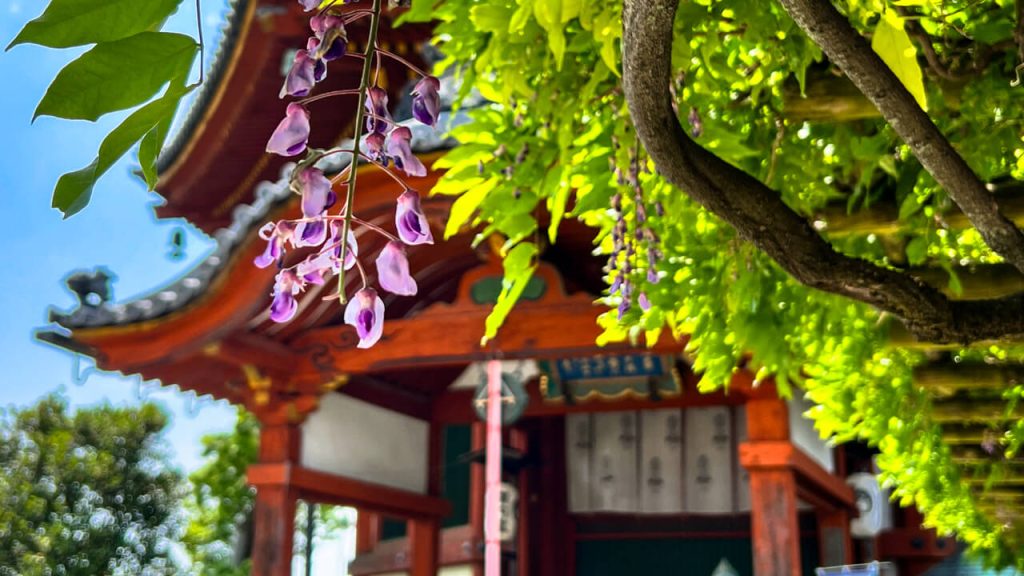
We’re going to share some things we’ve done with our kids in Nara, along with the attractions we want to check out on our next visits now that they’re a tween and teen.
5 things we did in Nara
Todaiji Temple
After feeding deer in the park, Todaiji was our big priority during our day trip to Nara with other worldschooling families. The temple complex has an entry fee, but it’s well worth it. If you’re visiting during spring cherry blossom season, there are gorgeous trees throughout the grounds.
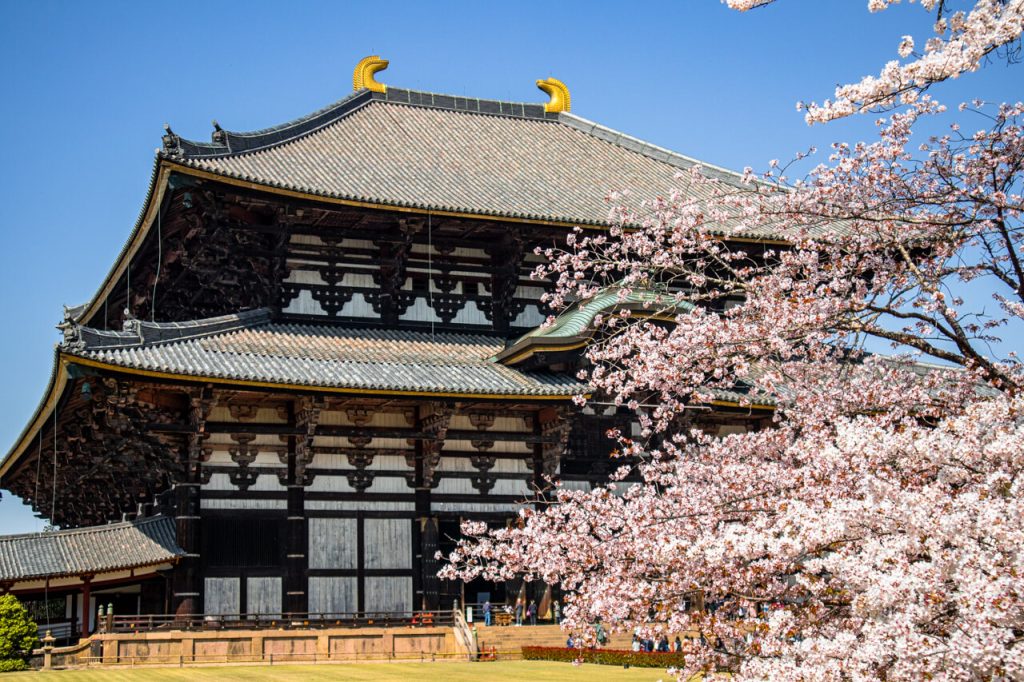
Todaiji isn’t just one structure though. The awe begins at the Nandaimon, or Great Southern Gate. The huge wooden gate also has two 8.4 meter-high stone guardians.
Beyond the gate, you cross a large plaza to reach the Great Buddha Hall of the temple itself. Inside, a guided circuit includes models of the complex, details about the temple and the Buddha statue, and of course, many angles to check out the Daibutsu (Great Buddha) statue itself. The impressive Daibutsu is 400 tons of bronze, stands 15 m (49 ft) high, and even used to be covered in gold.
Mobility tip
Todaiji has some accessibility features. Near the Great South Gate and taxi area, an accessible, flat stone path is available. It goes from the parking area to the Great Buddha Hall. If a visitor needs to rent a wheelchair, the security office in front of the Great Buddha Hall’s central gate has wheelchairs available on a first-come, first-serve basis.
Inside the Great Buddha Hall, the floor can be uneven, but overall you’re moving in a circuit around the central Buddha.
Enjoyed hot baths, people-watching and Japanese breakfast at a ryokan
During the mid-August Obon Festival, we treated ourselves to a two-night stay at Daibutsukan ryokan. A stay like this isn’t just a place to sleep and stash your stuff. It’s part of the experience.
Each morning, we enjoyed a specialty traditional Japanese breakfast, and each day offered a little something different from dish to dish.

While August isn’t necessarily prime onsen time for a hot bath, it was delightful to start the day with a morning soak.
Since our room’s balcony faced Sanjo Dori Street, Jodie and I sat at a small table to talk over the day and watch the people going to and from Nara Park and its various shrines and temples.
Plus, when we were ready to enjoy our own sightseeing and activities, the ryokan’s convenient location put us just a few minutes’ walk from the park’s attractions, including the Kofukiji temples and Sarusawa Pond.
Mobility tip
The streets immediately around Daibutsukan ryokan, including Sanjo Dori Street and Takabatakecho, are sloped and can be steep.
Much of Takabatakecho doesn’t have a sidewalk, though the street is lightly trafficked and has some bends that limit sight angles. However, the street is an overall tranquil shortcut to landmarks including Sarusawa Pond and the Nine-storey Pagoda.
Mid-August Obon Festival
Just as the spring cherry blossom season is a national event, the mid-August Obon Festival is a national holiday period (though some areas, such as Tokyo and the Kanto region, observe Obon in July). While grief and mourning can be part of how people observe Obon, the festival is just that: a festival. Japanese culture considers Obon a time to ancestors and loved ones who have passed on.
During Obon, it’s common for Japanese people to travel to see family and clean ancestral grave sites. Many areas of Japan, including Nara, also light up the night with lantern festivals, meant to guide spirits back to the world of the living for the duration of Obon.
Taking part in Obon was one of our family highlights. We use our travels not just as ways to learn more about the world, but to use those experiences to prompt conversation and connection within our wee family of four.
In Nara, the Tokae Lantern Festival runs early through mid-August, with lanterns lit throughout Nara, especially around Ukigumoenchi, just south of Todaiji.
Mobility tip
During Obon, you can follow the crowds. Many streets, such as Sanjo Doro Street, close to vehicle traffic and are open only to pedestrians strolling or rolling. The street can be crowded, but you can use the parts of the street or sidewalk that work best for your mobility.
Fed the deer
Naturally, yes, we fed the deer. The key isn’t to avoid the deer or feeding them. The key is understanding that there’s more to do in Nara than just feeding the deer.
However, both times we’ve visited Nara, we’ve enjoyed heading to some stretch of the park to feed the deer. Vendors around the park area sell the approved shika senbei (鹿煎餅, which translates to “deer biscuits” or “deer crackers”), which were ¥200 when we visited.
Before you wonder about skipping the crackers and giving them whatever you want, please don’t.

For example, we’ve seen people online talk about not wanting to pay for the crackers, and instead feed the deer cabbage or other foods. Local customs ask that people only feed the deer shika senbei, and many deer have suffered health problems from visitors feeding them other stuff.
We get that it’s well intentioned, or maybe you don’t want to spend the equivalent of about US$1.29 on crackers. If that’s the case, please feed nothing to the deer. It’s a matter of respecting both the deer’s health and local rules and customs.
Feeding the deer is also a natural part of going through the Nara Park area, since odds are you’ll pass through the park on the way to other attractions. If feeding the Nara deer isn’t your jam, no worries. Just pass on through. Typically, the deer are only interested in humans bearing shika senbei.
Mobility tip
Large paved sidewalks surround the park, and various paved and natural paths criss-cross the park grounds. Sidewalks can be uneven in places, usually because of tree roots pushing up the surface. The area around the park is the most crowded too.
Take a pottery class
Japanese destinations offer a variety of classes and activities that help visitors understand more about Japanese culture. When we were planning our Nara overnight visit, we narrowed down activity options in Nara to one of three classes, and asked our kids to choose.
Their choice? A pottery class.
After a day of sightseeing and being outside, it was a relief to spend the afternoon out of the August sun and inside an air-conditioned space.
Our teachers showed us examples of cups and bowls to use as guides for our own piece of pottery creation. While the children (hopefully) amused our hosts with wanting to make clay “slug cats” from the Nintendo game Rainworld, Jodie and I opted instead to make matcha bowls.
Getting hands on and doing an activity like this as a family is something we enjoy the most about our travels. We learned about pottery methods and processes, and could enjoy a couple of hours tucked into a project side by side, making souvenirs we could enjoy for years to come.
Mobility tip
You reach the classroom by going up a set of steep metal stairs with a railing. The interior pathways are narrow, and students sit at a large work table in the center of the room.
3 things we skipped (and why)
Museums
We’re selective about which museums we visit with kids.
During our day trip, we visited Nara with other families, and Todaiji was our chief priority for the day.
When we returned for our two-night stay, we kept Nara National Museum in our back pocket in case time, heat, rain, or all three meant we needed an indoor backup activity. However our priority was Obon, the toy museum, our pottery class, the visitor center (which, sadly, closed in 2026), and other sightseeing, so we didn’t make it to the museum.

Now that our kids are older, though, it’s easier to have museums in the mix. During our next Nara visits, we’ll be looking at which museums to include, such as the:
Nara National Museum: an extensive collection of Japanese Buddhist art.
Nara Kingyo Museum: Goldfish themed. Seriously. Nara is one of Japan’s top three areas for goldfish cultivation, and the museum showcases various species along with goldfish-themed art and design—including a disco-themed aquarium.
Okumura Commemorative Museum: Japan has the most intriguing technical museums. With its convenient location just inside Nara Park and east of Kintetsu-Nara Station, this museum especially features technologies related to seismic protection and understanding.
Nara Craft Museum: Features craft styles distinct to the Nara area over the centuries.
Plus one small place we just have to mention: The Catship Museum is tucked just down the street from the entrances to Yoshikien Garden and Isuien Garden. A local lady turned part of her home into an homage to all things cats, from puzzles to pillows. If you like cats, it’s a delightful, cozy place to check out. And the woman who runs it is very sweet, especially with kids.
Attractions outside of town
Our two visits didn’t work with heading out of Nara itself and visiting attractions in other parts of Nara Prefecture. However, Nara Prefecture is far more than just the city of Nara itself.
The prefecture extends south down as far as Wakayama Prefecture. Throughout Nara Prefecture, we’re curious about a range of attractions, including the Takayama Bamboo Garden and Museum (Takayama Chikurin-en), Keihanna Commemorative Park (complete with bamboo grove and museums), or perhaps the city of Kashihara, located in the southern part of Nara Prefecture.
Minor temples
Like Kyoto, it’s easy to think that you need to visit every temple in the area. And yes, Nara abounds with shrines and temples. Unless there’s something distinctive, intriguing, or that we feel a connection with, we prefer picking a handful to check out.

Temple fatigue is real, especially when traveling with kids. Just as we’d never want to visit every church in a European destination, we do not need to visit lots of shrines and temples.
Though that said, southwest of the main Nara attractions but still in town, Toshodai-ji and the nearby keyhole-shaped Mausoleum of Emperor Suinin are quite intriguing…
Visit Nara with kids
With two visits to Nara, our family very much wants to return. The city is family friendly, navigable for Jodie as a visitor with a disability, and has a compact footprint that can be crowded at times and in certain areas but is overall easy to get around.
Is Nara worth visiting with kids? Whether a day trip or overnight, Nara indeed is worth visiting with kids—and staying as long as you can manage in your Japan itinerary.