Practical tips for families trying Singapore’s food stall culture
Dumplings. Ribs. Flatbreads. Rice dishes. Steamed vegetables. All this and more at prices affordable for families? When visiting Southeast Asia, enjoying Singapore hawker centers with kids comes down not only to an affordable, hygienic way to feed parents and kids, but to getting a taste of local, everyday life and culture too.
Our family of four has visited Singapore twice, and hawker centers are one of our favorite activities. Hawker centers make it possible for us to try multiple dishes—and cater to the children’s tastes—all at one price, at prices that are friendly to our family budget. On our first trip to Singapore, a plate of dumplings even opened up a conversation with a Singaporean gentleman.
What to expect in this Singapore hawker guide for families
In this guide for traveling parents, we’ll introduce you to Singapore’s family-friendly hawker centers, including:
- What are hawker centers?
- Before you go: What parents need to know
- Navigating hawker centers with children
- Hygiene and food safety
- Making hawker centers work for picky eaters
- Five must-visit family-friendly hawker centers
- Special considerations
- Beyond the meal: Educational opportunities
- Planning your visit: How to work hawker centers into your Singapore itinerary
We want you to have the practical info that gives you the confidence to enjoy amazing Singapore food stalls with kids.
However, we don’t recommend specific stalls or dishes when eating children’s meals at hawker centers. Menus and prices change. Places change, and new ones open. Plus, one hawker center alone can have dozens of stalls. There are over a hundred hawker centers throughout Singapore, with over 6,000 individual stalls.
With so many options, you’ll find something that works for you and your family, even if your kids are at a picky stage.
In this hawker center guide for families, we’ll share a few hawker centers to include in your Singapore itinerary, but remember: Odds are the best hawker center in Singapore is the one closest to where you’re staying.
What are Singapore’s hawker centers?
We’ll spare you a big history lesson on Singapore street food for families, but the term “hawker centers” has its origins in 1970s Singapore. For what was then a young, newly independent nation, this was a tricky time for regulating food vendors and their hygiene.
Singapore’s government began a big push to license and regulate food vendors. Instead of moving around street to street, vendors instead had to shift to centralized facilities. Not only did that make it easier to provide sanitary facilities and monitor food safety regulations. Hawker centers were typically located close to housing estates, making these a convenient place for people to eat and drink.
Today, families visiting can find that Singapore hawker centers with kids are a great travel experience.
Understanding Singapore’s food stall culture
Today’s food stall culture continues the tradition of open-air, covered food courts that have multiple independent vendors. A small hawker center might have a handful of stalls. Larger ones have dozens.
Food stalls and hawker centers are at the epicenter of everyday Singapore dining. Everyone from schoolchildren to older adults, laborers to executives, might tuck into a tasty, affordable meal or snack at a food stall.
Considered UNESCO Intangible Cultural Heritage sites since 2020, hawker centers are a boon for the traveling family. Singapore has safe drinking water and stringent food safety regulations, and both an overall culture and legal framework that demand good food prepared well and with excellent hygiene.
Hawker center culture offers visitors, especially families with kids, a laid-back alternative to restaurants for affordable family dining in Singapore.
- These aren’t tourist traps, but where everyday people meet and eat
- With over 6,000 food stalls throughout Singapore’s 100+ hawker centers, there is a variety of foods that make it easy for the entire family to find something they’ll like
- A good rule of thumb on prices is to plan to spend around SGD$3-8 per person (USD$2.20-6)
- Communal seating helps everyone sit together, but be close enough to others to encourage casual conversation
- English and Mandarin Chinese are two of Singapore’s most common languages, so odds are you’ll be able to engage with the people around you
- Kids can approach stalls on their own to gain experience ordering food, handling money, and checking their order at pickup
Before you go: What parents need to know
While laid-back, casual, and affordable, Singapore hawker centers have their own culture and rules. Enjoy your time and meals more with these hawker center tips for families.
Cash vs. digital payments
Many hawker centers, especially older food stalls, still accept cash. That’s changing, though. More and more centers not only accept card or digital payments, but have stopped accepting cash altogether.
When possible, it’s helpful to use a digital payment method, such as a credit card or a mobile wallet on your phone.
Usually stalls have signage that shows what payment methods they accept. Sometimes their digital payments (such as PayNow, PayLah!, and NETS) are only for Singapore account holders. GrabPay may be an option for international visitors. If a stall accepts digital payments, it also usually accepts Visa and Mastercard.
When we visit hawker centers, we always bring smaller bills or coins, such as SGD$2, $5, $10. That’s also handy for the kids. If they want to order something themselves, we can pass them some money and they can head to the counter on their own.
Hawker centers typically have ATMs on the premises too, or if not, you can likely find one nearby, such as at 7-Eleven convenience stores.
Best times to visit with kids
When visiting Singapore hawker centers with kids, the best time varies, as different centers and stalls keep different hours.
Plus, some stalls might be open only for certain meals. A center might have stalls open only for breakfast, for lunch, or for dinner, or a combination. Other stalls cater to late-night and all-hours crowds.

When at the center, you can check hours, and mapping apps such as Google Maps often show listings and hours.
- For more seating, shorter lines, avoid peak meal times, especially by going a little before peak hours, such as half an hour to an hour earlier
- Lunch rush is typically 12-2 p.m.
- For an early dinner (or early evening snack), target 5-6 p.m.
- Breakfast can be a great time to visit, as there are usually different menu items available, and usually breakfast has the smallest crowds and most options for seating
What to wear and bring
- Most hawker centers are open air (though usually covered), so dress for Singapore’s heat and humidity
- Tissues and/or wet wipes
- Hand sanitizer
- Small backpack for carrying purchases from adjacent markets
- Stroller considerations (varies by center)
Singaporeans bring their little ones too. When visiting hawker centers with toddlers or infants, you may want a carrier or sling. Larger strollers may be too tricky to move around narrow aisles, but a small umbrella-style stroller works fine.
Navigating hawker centers with children
Your experience at a Singapore hawker center starts the moment you arrive.
Look online for food stalls in the center you’re visiting. If you identify some specific stalls in advance, that can make it easier to home in on the places and dishes you want to try.
Some centers have food stall listings and locations online. If not, the entrance usually has a directory.
Don’t beeline to the first stalls closest to the entrance. Some centers are multi-level and have multiple rows with stalls on both sides, often with seating in the middle.
If we don’t have a specific stall in mind, we often head to the top floor and do a quick circuit. Sometimes we do this for each floor, but it depends on the center, when we’re visiting, and if we quickly find a place that we want to sample from.
This scouting excursion also gives you a chance to figure out where you want to sit. For example, if you want to be closer to a restroom, tables near the exits are usually closest. If you plan to sample from multiple stalls, you might instead aim for seating that’s right in the middle of two rows of stalls, so it’s easy to snag a dish and come back quickly.
Doing a circuit not only helps you narrow down where you want to eat at Singapore hawker centers with kids. It helps you manage your first task at a hawker center: finding and holding your seats.
Secure your seating first
You know what sucks? Waiting in line, waiting for your food to be ready, and then wandering around, carrying a tray, and trying desperately to find seats.
Singapore hawker centers don’t put that burden on you.
Instead, you find and claim your table before ordering. It’s called “chope” (rhymes with “rope”). Chope, or reserving your seat, is as simple as putting a pocket pack of tissues down on the table. We usually put a small something on the table at each seating we plan to use for the four of us. If you prefer, one adult could also sit at the table to hold your seats while the others order.
If you want a good look at the food prep work (and it is impressive to see these hard-working folks in action), consider sitting near the stalls. Or if the heat, smoke, and steam might bother you, that’s a good sign you’ll want to sit in the larger, more open seating areas that are usually available. Some centers have a central courtyard or open space, and tables near the railings have more fresh air and light.
Survey your options
You don’t have to scope out the entire hawker center, especially if it’s big, you’re with impatient travel partners (especially of the under-18 variety), and/or you’re blazingly hungry.
When you first arrive, check around the entrance for a directory and use that to guide your search. We sometimes look at a stall or two to give us some ideas, and then also see what’s right around it.
If you have kids with you, hawker centers are so much fun to point out what’s going on, or ask questions about what the kids notice. If some bit of tastiness catches their attention, head to that stall and get an order. One of the nice things about hawker centers is that they are affordable enough to sample a few stalls and dishes—especially fun when you’re there for a light snack.
If there’s a particular stall you come to like, we find it’s helpful to jot down the name and location, and take a photo of the front. Many stalls have a menu or display, and we also take a photo of that so we don’t have to remember what they offered.
Ordering food
There’s nothing special about how to order at Singapore hawker centers. Once you’ve chosen a stall or a selection of stalls, start getting those orders in. Cooks typically prepare your food fresh and to order. Waits are typically around 5-15 minutes.
If you’re ordering multiple dishes to share, you don’t need to wait for everything to come out before you eat. Tuck in to whatever is ready.
Ordering 1-3 dishes can be a great sampler, especially for kids.
It’s common for people in Singapore to speak at least some basic English, or perhaps some Mandarin Chinese. If you’re having a hard time communicating, point at what you want, and the stall owner will take it from there.
If you have dietary restrictions, see if you can convey your needs verbally. Or, your phone’s translation app can help you. That can go for spiciness too. For example, “Mai la” is a Mandarin Chinese phrase that means “not spicy.”
Collecting and sharing meals
You’ve got options for how you want to dine when enjoying Singapore hawker centers with kids. Sometimes we each get our own individual dishes. Most of the time, we enjoy ordering multiple dishes from multiple stalls, and doing a family-style meal. That way we each get to try something. And if it turns out something wasn’t to the taste of someone in the group, odds are another of us will like it and can eat more of it.
When you order, and especially if you’re a group, see how you can divide and conquer. One person might order drinks, another might order dishes from one stall, and someone else can stay at the table.
Given Singapore’s heat and humidity, we find it’s nice to snag beverages first, so we can sip and rehydrate while we wait for our food.
When eating at hawker markets with children, you can head back to a stall whenever you want. There’s no pressure to over-order or over-eat. Order a few dishes. Odds are you’ll be called to the stall for pickup, or they might tell you to wait nearby while they get it ready, then they’ll call your name. The pickup system will vary from stall to stall.
After you eat, you can always order more food. But part of what we enjoy about sharing meals is that we find that helps us all keep our portions in better balance, so we aren’t overstuffed when going back out into the heat of the day.
Return your tray
If you’re thinking you can leave your tray, dishes, or trash on the table and just head out, please don’t. Not only is it rude culturally to do so. It can actually get you fined hundreds of dollars—which rather defeats the purpose of dining at a hawker center, anyway.
Hawker centers have dedicated trash and tray return areas, and all diners, including visitors, are expected to tidy up their seating area, throw away their rubbish, and return their trays. Also watch for signage about what to return where: centers usually have separate “halal” and “non-halal” return areas. That’s not just a sign of respect for the country’s Muslim culture, but part of Singapore law for using hawker centers.
Hygiene and food safety for families
When figuring out where to eat anywhere in the world, and especially when you have kids, first you want to know whether you need to worry about getting sick. Food stalls are an excellent choice of where to eat with kids in Singapore.
At Singapore’s hawker centers, a combination of strict regulatory and cultural food safety, plus practical personal hygiene, means you can have a high confidence of being safe and not getting sick.
Singapore has strict food safety and hygiene regulations
Are Singapore hawker centers safe?
Oh yeah.
For starters, Singapore enforces stringent food safety regulations and inspections for hawker center hygiene. Stalls and restaurants receive a publicly displayed grade as part of Singapore’s Safety Assurance for Food Establishments (SAFE) Framework. Staff who handle food have to meet requirements and pass courses on safe food practices in order to work.
Hawker centers also shut down occasionally for mandatory deep-cleans, as well as other repairs, renovations, or redecorations.
When visiting Singapore hawker centers with kids, you’ll find older adults, toddlers, and every age in between. None of them want to get sick anymore than you do, and they wouldn’t be eating there if they feared for their health.
Of course, lapses happen, but the typical day-to-day trend is safe eating and drinking. Overall, you are unlikely to get sick dining out at hawker centers in Singapore. Personally, our family wouldn’t think twice about it.
Practical hygiene tips matter in Singapore too
All that said, your own personal hygiene plays a big role in staying healthy too. The usual hygiene tips apply in Singapore just as they would anywhere else for food safety in Singapore with kids and for yourself:
- Wash hands before eating, and hawker centers usually have handwashing stations
- Bring hand sanitizer and sanitize just before you eat
- Give the table a quick wipe-down
- Singapore’s tap water is safe for consumption, but you can snag hot or bottled beverages if that gives you more peace of mind
Hawker centers work for picky eaters of all ages too
Perhaps your child is in a picky stage. Or you don’t consider yourself an adventurous eater.
Singapore’s food culture brings together influences from all over the world and caters to a range of palates.
Hawker centers offer variety
A key advantage of hawker centers is that the variety of dishes available makes it far more likely that everyone in your group can find something to eat. Even picky eaters at Singapore hawker centers can find something they’ll like.
Noodles or rice dishes, meats and veggies, you name it. Some foods will be available spicy or with elaborate sauces, but you can also find plenty of mild, simple dishes too. If kids or other picky eaters in your group need something familiar, consider dishes such as roasted chicken, fried rice, or noodle soups. Or, consider something familiar, with something new on the side, such as a sauce or a new protein.
Above all, there’s no pressure. It’s just you and your group having a bite. You just are in a really awesome place for dining.
Building confidence through food exploration
You can eat what you want, your way, here. If you want to push yourself, that’s outstanding. But you don’t have to.
It’s useful to go familiar and slow when dining in Singapore, and hawker centers make that pretty easy, especially for families. You’re already in an unfamiliar place. Familiar foods can help you and your group feel more at ease. Even better? Once people feel more settled in, they might get more adventurous. But you and your group can take each meal and each dish at your own pace.

Here are a few ways Singapore hawker centers can help even picky eaters get comfy:
- Smaller portions or snack-size dishes lower the stakes, since it’s just an opportunity to try something small.
- At many stalls, you can see the prep and cooking in action. Treat it like a show, where you and your group can watch the food come together. This can be especially encouraging for kids.
- Start with familiar flavors or foods to show that there’s plenty similar to what they already know. From there, anyone can build out to be more adventurous as they want.
Common kid-friendly/picky-friendly options at most hawker centers
Throughout Singapore’s hundred-plus hawker centers, some common dishes come up. Many of these are kid-friendly Singapore food or other picky eaters at hawker centers. Keep an eye out for:
- Hainanese chicken rice
- Fried rice
- Noodles
- Dumplings
- Buns
- Flatbreads
- Fresh fruit juices
- Grilled or roasted meats
Any of these can be go-to children’s meals at hawker markets.
Food stalls offer a lot of variety. And remember: Singapore kids or other people can be just as picky as anyone else. They find something to eat at hawker centers. You and your group can too.
5 must-visit family-friendly hawker centers
With over a hundred hawker centers and over 6,000 individual food stalls, how in the world do you choose where to eat with kids in Singapore?
As we said, we won’t recommend specific stalls. But we will offer some tips to help you choose what’s right for you and your group, and note a few hawker centers that can be great must-visits for anyone getting their personal taste of Singapore.
Tips for choosing hawker centers
What’s close to where you’re staying?
If it’s close to your accommodation, try it out. Remember, many hawker centers were deliberately located to be close to residences and other accommodation, and to appeal to the folks in the area.
Ask for a recommendation.
Staying at a hotel? Tell the front desk which hawker center you want to go to and ask for where they like to eat or, even better, where they dine with their own friends and family. If you aren’t sure which hawker center to try first, ask them for a suggestion.
Is there a particular food culture, style, or dish you want to try?
Hawker centers in Chinatown will offer more offerings from throughout mainland China and the Chinese diaspora. Little India’s hawker centers will offer more flavors from throughout India, Pakistan, and beyond.
If there is a particular food or cuisine you want to go deep into, research different hawker centers and areas of Singapore. That can steer you to where you want to go. And remember, wherever you are in Singapore, you can get around easily with the country’s excellent bus and train network.
With so many options for the best hawker centers for families, it helps to have a few starting points. Consider these 5 hawker centers for your Singapore itinerary:
1. Chinatown Complex Food Centre
Our first visit to Singapore coincided with the Lunar New Year. Snagging lunch, dinner, and snacks amid our Chinatown wanderings was so much fun for us and our two kids.
- Location: Chinatown (Block 335 Smith Street)
- Why families love it: With around 260 stalls, the variety makes it easier for everyone in your group to find something they’ll like
- Family advantages: Multiple floors disperse crowds, and it can be easier to find seating for a group
- Nearby: Chinatown Heritage Centre, Buddha Tooth Relic Temple
- Getting there: Chinatown MRT Station
- Parent tip: The first floor is usually the most crowded. Often, you can find more breathing room and shorter waits at the stalls on the second floor.
2. Maxwell Food Centre
With around 30 stalls, the Maxwell is considered Singapore’s best-known hawker center. It’s especially known for having Michelin-listed stalls, and iconic representations of classic Singaporean dishes such as chicken rice.
- Location: Chinatown/Tanjong Pagar (corner of Maxwell Road and South Bridge Road)
- Why families love it: Smaller size and fewer stalls make it less overwhelming and easier to navigate with kids
- Family advantages: central location, shorter walks between stalls
- Nearby: Buddha Tooth Relic Temple, Chinatown
- Getting there: Chinatown MRT or Tanjong Pagar MRT
- Parent tip: Maxwell gets pretty busy during lunch. For better seating and shorter lines, aim to visit before or after lunch rush.
3. Tiong Bahru Market & Food Centre
We’ve stayed just a short walk from Tiong Bahru, and that proximity made it so much easier to nip down for a meal or snack, plus explore different stalls. It’s one of the most family-friendly hawker centers in Singapore.
- Location: Tiong Bahru neighborhood (30 Seng Poh Road)
- Why families love it: Recent renovations have made Tiong Bahru cleaner and better organized than older centers.
- Family advantages: great breakfast options, fun surrounding neighborhood to explore
- Nearby: Tiong Bahru neighborhood walks, independent bookstores, parks (such as the lovely Seng Poh Garden)
- Getting there: Tiong Bahru MRT Station
- Parent tip: The park, market, and neighborhood make Tiong Bahru ideal for a morning visit with breakfast, then a free wander around the area, followed by snacks or lunch back at the hawker center
4. Tekka Centre
The energy and sensory vibrancy of South Asia come to life at this multi-level center and its approximately one hundred stalls. We especially enjoyed sampling small dishes here, plus the fruit smoothies and juices were most welcome after a morning of walking around Little India.
- Location: Little India (665 Buffalo Road)
- Why families love it: cultural immersion and variety of cuisines from different parts of India
- Family advantages: It’s more climate-controlled than other markets. Along with the cooked food stalls, you can also check out the wet market and textile stalls for more variety in your experiences while being in one place.
- Nearby: Little India Heritage Centre, Sri Veeramakaliamman Temple
- Getting there: Little India MRT Station
- Parent tip: Great for families who already enjoy Indian cuisine, but the dishes such as flatbreads or rice can cater to more unsure or picky eaters
5. Old Airport Road Food Centre
Established in 1972, Old Airport Road is a classic hawker market. It’s less touristed than others, but it’s popular aplenty with locals and is especially considered among the best hawker centers for families. The around 160 stalls here also give you lots of options, including a cross-section of cuisines that reflects Singapore itself: Chinese, Indian, Malay, and more.
- Location: Geylang (51 Old Airport Road)
- Why families love it: authentic local experience, less touristy
- Family advantages: large, open layout; popular with Singaporean families
- Nearby: Geylang Serai Market, Katong (Peranakan heritage area)
- Getting there: Dakota MRT Station
- Parent tip: Combine with an afternoon visit to nearby Katong neighborhood: snag lunch here, explore the area, then come back to top up and cool down with snacks and drinks
Special considerations
When getting around hawker centers, especially navigating hawker centers with kids, the everyday, every-person purpose means that just as ordinary Singaporeans can navigate them, you can too.
Strollers and mobility devices
Singapore is very accessible to people with mobility disabilities or impairments. Accessibility at Singapore hawker markets will vary from place to place, and older facilities can be less accessible. For example, an older center might not have an elevator and might only have stairs to the upper floors.
Newer or renovated centers get enhanced accessibility designed and built to current standards, such as with wider paths, elevators, ramps, and sometimes lifts. Under the Accessible Amenities for All plan, all hawker centers are getting redesigns to improve access.
There’s no definitive list of accessibility and hawker centers, unfortunately. As you identify centers you want to visit, typically you can find accessibility details more from personal accounts, such as via Reddit, TripAdvisor, Viator, or travel blogs.
If visiting hawker centers with strollers, a smaller stroller makes for easier navigation than a large jogger-style model. A child carrier could be a better choice, and it keeps your hands free. Keep an eye out for stroller parking areas and consider leaving yours there too, just like the folks visiting from the surrounding area.
Bathrooms and changing facilities
Hawker centers typically have public restrooms. Sometimes they have changing tables, but it depends on the center and how recently it was renovated. Newer or more recently renovated centers are more likely to have changing facilities for infants and adults (and sometimes separate nursing rooms for mothers and infants).
Bring your own tissues and wipes, as sometimes supplies vary.
Whether the restrooms or separate hand-washing areas though, you can easily wash your hands.
Dietary restrictions and allergies
Hawker centers typically have directories of their cooked-food stalls. However, dietary restrictions at hawker centers can be tricky to navigate.
Food allergies, vegetarian, or gluten-free options are going to vary from center to center, and may be limited. Given the open nature of hawker centers, cross-contamination is a possibility, though halal stalls are clearly marked.
Similar to accessibility, researching specific hawker centers and your dietary needs can turn up info and suggestions that help you find the right place.
Educational and cultural opportunities beyond the meal:
The joy of hawker centers is that they offer more than a meal. Hanging out at a hawker center is a snapshot into the lives of everyday Singaporeans.
We love going not just for the food, but for the people watching and interactions. If we can catch the timing right and it’s not too busy, sometimes we might chat with vendors or fellow diners. It’s never a for-sure thing. During rush times, we won’t try having chit-chat with anyone deep in the middle of fulfilling lots of orders.
Hawker centers also anchor many neighborhoods or cultural areas. We find them useful as bases when exploring areas such as Chinatown or Little India, especially as mid-point breaks or where we finish up some time sightseeing.
What kids learn at hawker centers
Hawker centers are also a subtle, easy way to build in some practical and cultural learning for kids while visiting Singapore, such as
- Cultural diversity through food
- Observing food stall workers and fellow diners
- Confidence in trying new things
- Basic commerce, ordering food, and handling money
- Social interaction across language barriers and different cultures
- Independence, especially for older kids who can go off on their own and order their own meals
Tips to make your visit memorable
When you’re at a hawker center, there is so much to observe. Plus, centers offer easy ways to make visits even more memorable as low-key educational travel experiences, such as
- Kids choose a dish to try or for the group to share
- Try using basic Chinese Mandarin, Malay, or Tamil greetings or thank-yous
- Observe and discuss cooking techniques: What’s similar or different to how you cook at home?
- When it’s a slower time, talk with vendors about their food, where you’re from, and why you came to their stall: many vendors love chatting with families and especially love it when they see kids trying new things
- Connect food to travel learning as part of your family travel in Singapore
Planning your visit: How to work hawker centers into your Singapore itinerary
Hawker center meals and snacks typically dovetail into your overall Singapore itinerary pretty easily. After all, you’ve gotta eat!

Wherever your day in Singapore takes you, odds are you can include at least one hawker center meal as part of your sightseeing and activities that day. Plus, anytime you just need a snack and a break from the sun, a hawker center can be an easy win. These hawker market tips for families can help you work food stalls into your sightseeing throughout Singapore.
Accommodation strategies
- Staying within walking distance of a hawker center keeps that an easy option for convenient, affordable meals, snacks, and beverages
- Some neighborhoods have multiple nearby centers, such as Chinatown, Little India, and Geylang
- Set a goal, such as having at least one meal a day from the hawker center closest to where you’re staying
- Hawker center meals are easier on the budget than other dining options. That can open up more of your family travel budget to other experiences, or offset the usually higher cost of accommodation in Singapore.
Build hawker visits into your itinerary
- Wherever you’re going in Singapore, odds are you can combine that day’s sightseeing with a meal or snack at a hawker center in the area
- Break up museum and attraction days with hawker meals and snacks
- Make the hawker center visit an activity itself, not just a refueling stop
Set expectations with kids before you go
- Discuss food stall listings or dishes with kids: Which ones are they excited to try?
- Make a scavenger hunt of dishes, perhaps with a special treat or prize at the end
- Show your kids photos and videos of hawker centers before visiting, so they can get familiar with what the centers are like
- Discuss what to expect, such as new aromas, crowds, and heat
- Frame a hawker center as an opportunity for everyone to find something they like
- Encourage everyone to try at least one new thing, or at least a bite of one new dish
It doesn’t matter if they don’t take to a dish now. Your hawker center visits are a no-pressure way to get experience with new-to-them foods and cultures. Much of the experience can be like a seed planted now, that grows up when the kid is more ready in the future.
Burger burger dumpling: A snapshot of our family’s experience at a Singapore hawker center
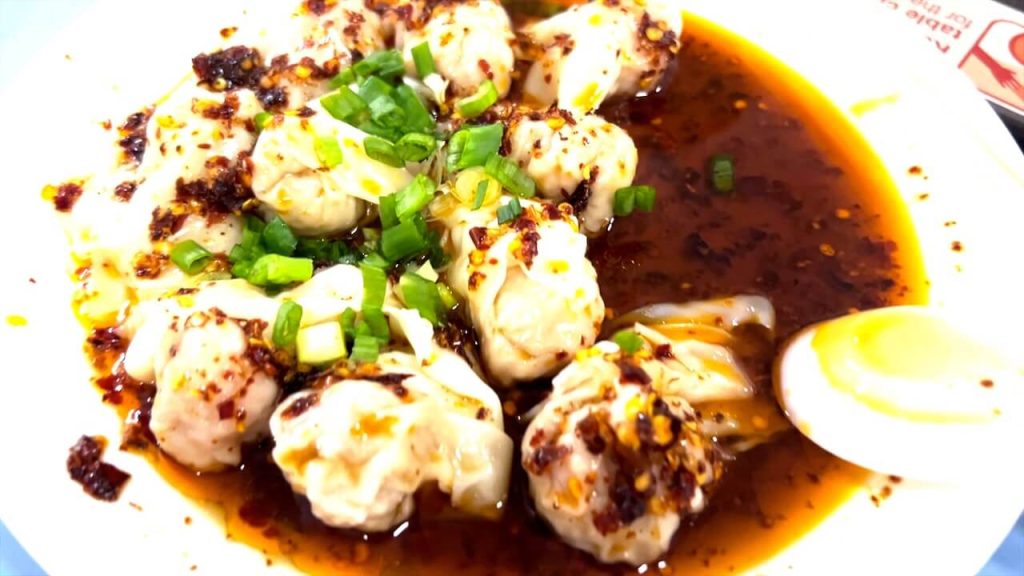
In front of Connor and Aster, the two bamboo steamer racks of steamed pork and veggie mini-buns were empty, and the platter of pan-fried dumplings had been picked clean. A red, tingly sauce was all that remained of the spicy Szechuan dumplings Jodie and I had shared.
Around me, the second-floor food stall hawker market in Singapore’s Chinatown bustled with people either waiting for or enjoying incredible meals from dozens of local food stalls.
I held our table while Jodie and the kids went to pick out something for dessert. To my left, two older gentlemen, local as far as I could tell, and I believe of Chinese heritage, sat across from each other and chatted. The gentleman on the opposite side of me glanced at the children’s empty dishes. With a grin, he nodded.

“So many kids, it’s just burger, burger,” he said, and he nodded toward the children’s empty seats. “They did very well.”
I thanked him and added, “You know how it is. We love burgers too, but we want the kids to know there’s so much more beyond burgers and fries.”
He leaned forward. “Do they like Indian food?”
“Not yet,” I replied. “That’s been one of the trickier cuisines for them to take a liking to, but we’re working on it. Thai, Japanese, Chinese, Vietnamese—they love it. But Indian food and spicy food are still works in progress.”
“That’s good,” said the gentleman. “They will know what’s good.”
You never know what foods your kids might take to, or what conversations might come up with your fellow folks at a hawker center. But for us, visiting here earlier in our world travels, this little interaction was major validation that we were doing the right thing in showing our kids more of the world, and encouraging them to try new things.
Hawkers centers are authentic, delicious Singapore family travel experiences
When visiting Singapore, and especially when visiting Singapore with kids, hawker centers are so much more than just a meal. They give you insight into the lives of everyday Singaporeans, and you’ll see so many people of all ages enjoying food together.
Plus, as we learned during our own dumpling experience, kids expand their palates when they have opportunity and no pressure. As our travels have continued, both of our kids, a tween and teen as of this writing, are more and more willing to try foods from other cultures. Reflecting on our first Singapore visit, we can trace that willingness to our experiences at hawker centers.
Visiting Singapore hawker centers with kids offers an accessible, affordable, authentic, and above all delicious way for visitors to experience Singapore. These are places that everyday folks go. You as a visitor can have a great time, and a wonderful meal, at hawker centers too.